What Is Numerology? A Clear, Complete Guide for 2026
What is numerology? Numerology is a belief system that assigns meaning to numbers derived from your name and birthdate. It’s used to analyze personality traits, predict life patterns, and guide personal decisions. While the scientific community classifies it as a pseudoscience, millions of people around the world use numerology as a self-reflection tool and a framework for understanding themselves and others.
If you’ve ever wondered why certain numbers seem to follow you around, or you’ve seen references to “Life Path Numbers” and “Universal Years” online, this guide will give you a straightforward breakdown of how numerology works, where it came from, and how people apply it in 2026.
Key Takeaways
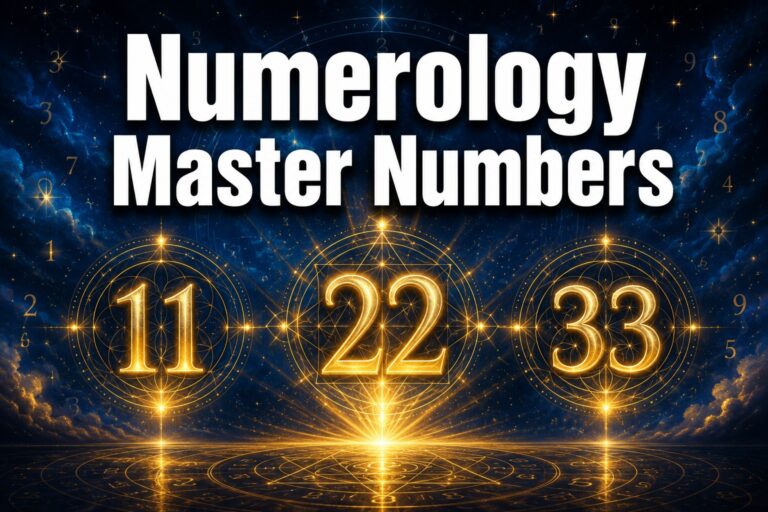
- Numerology converts names and dates into single-digit numbers (1–9), plus master numbers 11, 22, and 33, each carrying specific meanings.
- Pythagoras (570–495 BCE) is credited as the father of modern numerology, though number-based belief systems existed in ancient Egypt, Babylonia, and China long before him.
- Your Life Path Number is the most important number in numerology. It’s calculated from your full birthdate and is said to reveal your core personality and life purpose.
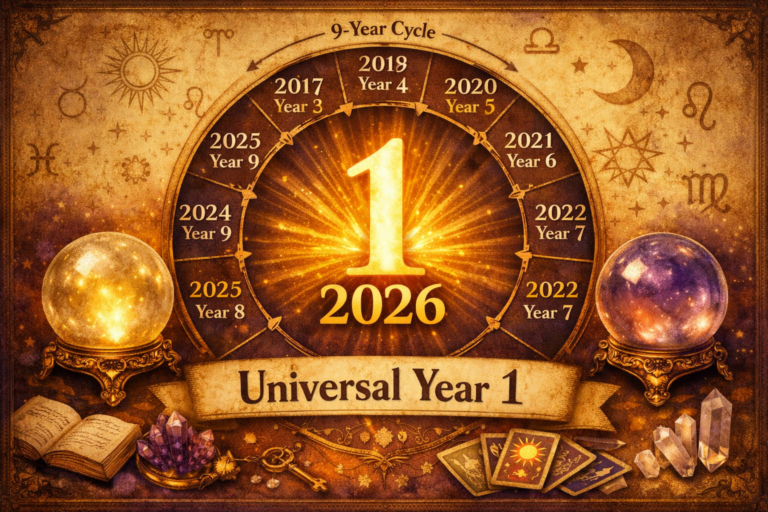
- 2026 is considered a Universal Year 1 in numerology (2+0+2+6 = 10, 1+0 = 1), which practitioners associate with new beginnings, leadership, and fresh starts.
- Numerology has no scientific backing. No peer-reviewed research supports the idea that numbers influence events or personality. It’s best understood as a personal reflection tool, not a predictive science.
Quick Answer
Numerology is the study of the supposed mystical relationship between numbers and life events. Practitioners reduce names and dates to single digits, then interpret those digits using established meaning systems. The most common form used today is Pythagorean numerology, which maps each letter of the alphabet to a number from 1 to 9. People use it for self-analysis, decision-making guidance, and understanding relationship dynamics.
How Does Numerology Actually Work?
Numerology operates on one core idea: every number from 1 to 9 carries a specific vibration or energy, and by reducing complex information (like your full name or birthdate) down to a single digit, you can interpret its meaning.
Here’s the basic process:
- Start with raw data. This is usually your full birth name (as it appears on your birth certificate) and your complete date of birth.
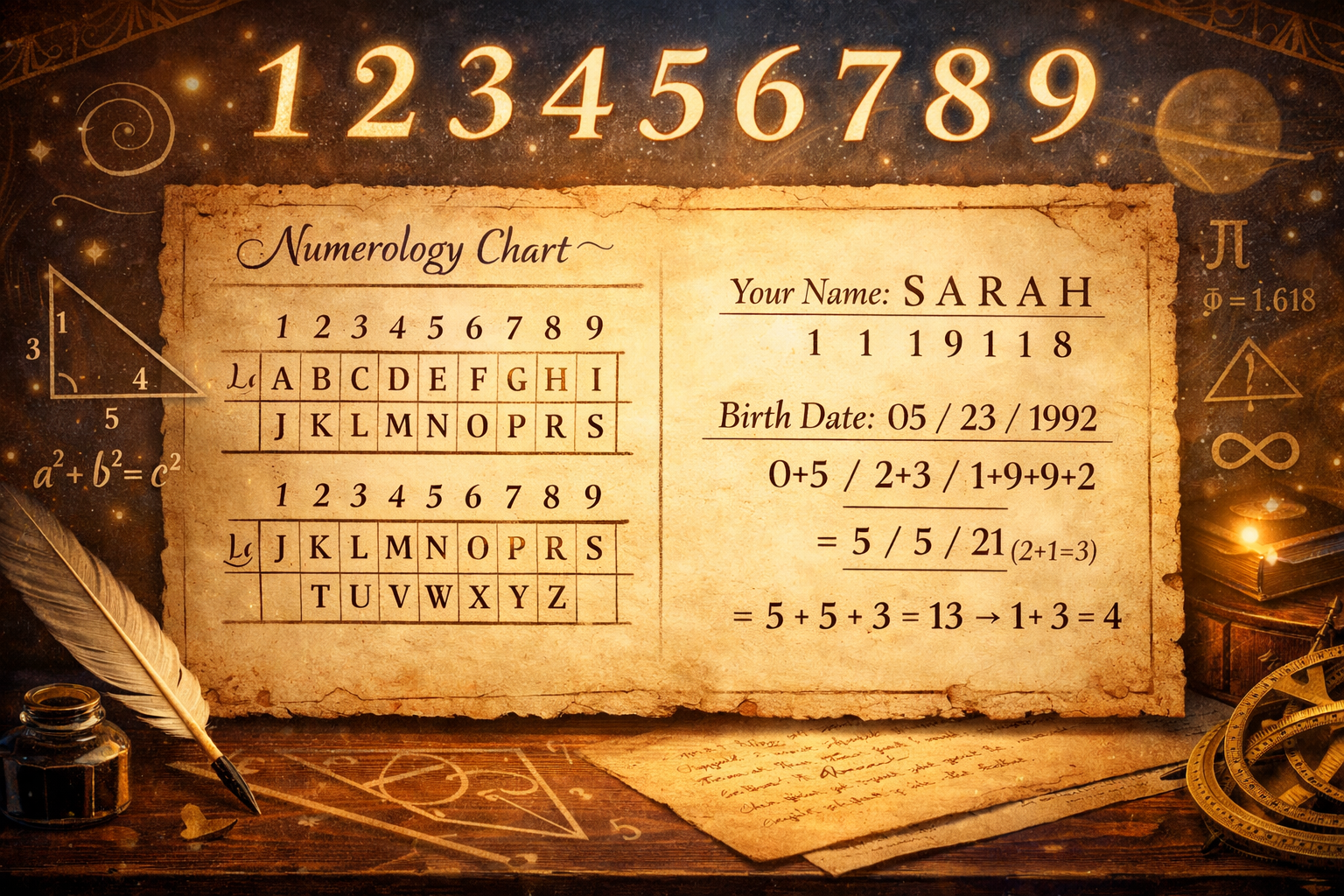
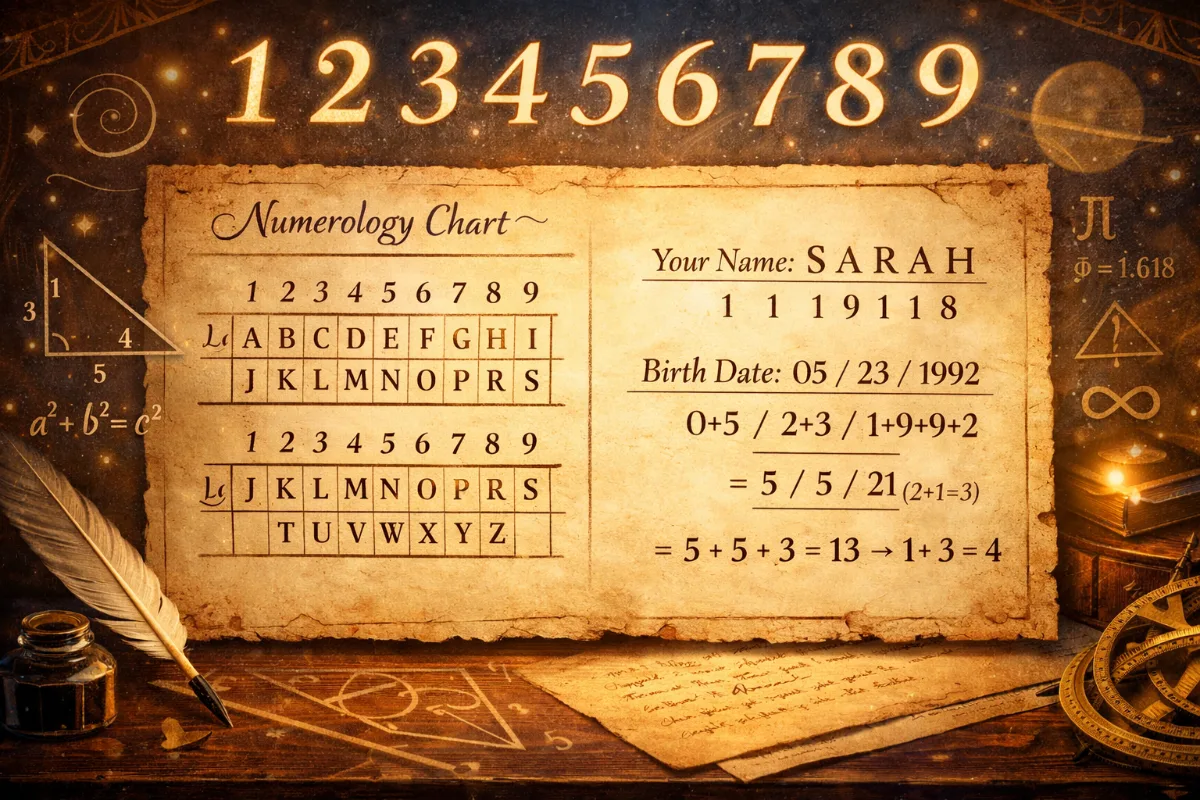
- Convert letters to numbers. Using a chart (Pythagorean system), each letter of the alphabet corresponds to a number 1–9.
- Add and reduce. You add the digits together repeatedly until you reach a single digit, unless you hit a master number (11, 22, or 33).
- Interpret the result. Each final number has an assigned set of traits, tendencies, and life themes.
The Pythagorean Letter to Number Chart
| 1 | 2 | 3 | 4 | 5 | 6 | 7 | 8 | 9 |
|---|---|---|---|---|---|---|---|---|
| A | B | C | D | E | F | G | H | I |
| J | K | L | M | N | O | P | Q | R |
| S | T | U | V | W | X | Y | Z |
So if your name is Jane, you’d calculate: J=1, A=1, N=5, E=5. That gives you 1+1+5+5 = 12, then 1+2 = 3.
Common mistake: Many beginners use their nickname or married name. Traditional numerology calls for the name on your birth certificate because practitioners believe that name carries your original “vibration.”
Where Did Numerology Come From? A Brief History
Numerology isn’t new. Number-based belief systems have existed for thousands of years across multiple cultures.
Pythagoras (570–495 BCE) is widely credited as the father of modern Western numerology. The Greek mathematician taught that numbers weren’t just tools for counting but had vibrational qualities that influenced the universe. He reportedly studied numerical traditions in Egypt and Babylonia before developing his own system.
Other historical roots include:
- Chaldean numerology from ancient Babylonia, which assigns numbers based on sound vibrations rather than alphabetical order
- Kabbalah numerology from Jewish mystical tradition, which focuses on the Hebrew alphabet and has 22 vibrations rather than 9
- Chinese numerology, which emphasizes lucky and unlucky numbers (8 is considered very lucky; 4 is avoided because it sounds like the word for “death”)
The system most people use today in the English-speaking world is the Pythagorean method, and that’s what most online calculators and numerology books reference.
Edge case: If you’re working with a non-Latin alphabet name, Chaldean or Kabbalah systems may be more culturally appropriate. The Pythagorean chart was designed around the English alphabet.
What Is a Life Path Number and How Do You Calculate It?
Your Life Path Number is the single most referenced number in numerology. Think of it as the numerology equivalent of your zodiac sun sign. It’s calculated from your full date of birth and is said to represent your core personality, strengths, challenges, and life direction.
Step-by-Step Calculation
Let’s use the birthdate July 14, 1990 as a real-world example:
- Month: July = 7
- Day: 14 → 1+4 = 5
- Year: 1990 → 1+9+9+0 = 19 → 1+9 = 10 → 1+0 = 1
- Add the three results: 7 + 5 + 1 = 13 → 1+3 = 4
This person’s Life Path Number is 4.
Important: If at any point during the reduction you get 11, 22, or 33, you stop. These are master numbers with their own meanings.
What Each Life Path Number Means
| Life Path | Core Traits | Challenges |
|---|---|---|
| 1 | Leadership, independence, ambition | Stubbornness, isolation |
| 2 | Diplomacy, sensitivity, partnership | Indecisiveness, over-sensitivity |
| 3 | Creativity, communication, optimism | Scattered energy, superficiality |
| 4 | Discipline, stability, hard work | Rigidity, resistance to change |
| 5 | Freedom, adventure, adaptability | Restlessness, inconsistency |
| 6 | Responsibility, nurturing, community | Over-giving, control issues |
| 7 | Analysis, introspection, spirituality | Withdrawal, skepticism |
| 8 | Power, financial skill, authority | Workaholism, materialism |
| 9 | Compassion, idealism, global awareness | Emotional burnout, detachment |
| 11 | Intuition, inspiration (master number) | Anxiety, self-doubt |
| 22 | Master builder, large-scale vision | Overwhelm, impracticality |
| 33 | Master teacher, selfless service | Martyrdom, emotional weight |
Choose this number to focus on if: you’re brand new to numerology and want a single starting point. The Life Path Number gives you the broadest overview of what numerology says about you.
What Are the Other Core Numbers in Numerology?
The Life Path Number gets the most attention, but a full numerology profile (sometimes called a “numerology chart”) includes several other numbers. Here’s a user-focused breakdown of the five most common:
1. Expression Number (also called Destiny Number)
Calculated from your full birth name. It’s said to reflect your natural talents, abilities, and the goals you’re meant to pursue.
2. Soul Urge Number (also called Heart’s Desire Number)
Calculated from the vowels in your birth name. It’s supposed to reveal your inner motivations, what you truly want at a deep level.
3. Personality Number
Calculated from the consonants in your birth name. This represents how others perceive you, your outward persona.
4. Birthday Number
Simply the day of the month you were born, reduced to a single digit if needed. It highlights a specific talent or gift.
5. Personal Year Number
Calculated by adding your birth month + birth day + current year. This changes annually and is used to predict the theme of your year ahead.
Real-world example: Someone born March 8 would calculate their 2026 Personal Year as: 3 + 8 + 2+0+2+6 = 21 → 2+1 = 3. A Personal Year 3 is associated with creativity, social connection, and self-expression.
What Is Numerology’s Take on 2026?
In numerology, every calendar year has a “Universal Year Number.” You calculate it by adding all the digits of the year: 2+0+2+6 = 10, then 1+0 = 1.
2026 is a Universal Year 1. Practitioners interpret this as a year of new beginnings, fresh starts, and stepping into leadership. It follows 2025, which was a Universal Year 9 (endings, closures, and karmic completions).
Here’s what numerologists are saying about 2026:
- Fresh cycles. After the closure energy of 2025, Year 1 is seen as a reset. It’s considered a good time to launch projects, start businesses, or make major life changes.
- Leadership and independence. The number 1 energy emphasizes self-reliance, courage, and taking initiative.
- Potential ego conflicts. Some practitioners warn that the strong “1” energy can also bring stubbornness and power struggles on both personal and global scales.
Christine DeLorey, a numerology forecaster, described early 2026 as carrying a “1-1-2 vibration,” encouraging patience and diplomatic communication even within the bold Year 1 energy.
Decision rule: If you’re someone who uses numerology for timing decisions, practitioners generally recommend Universal Year 1 for starting things and Universal Year 9 for ending or releasing things.
How Is Numerology Different from Astrology?
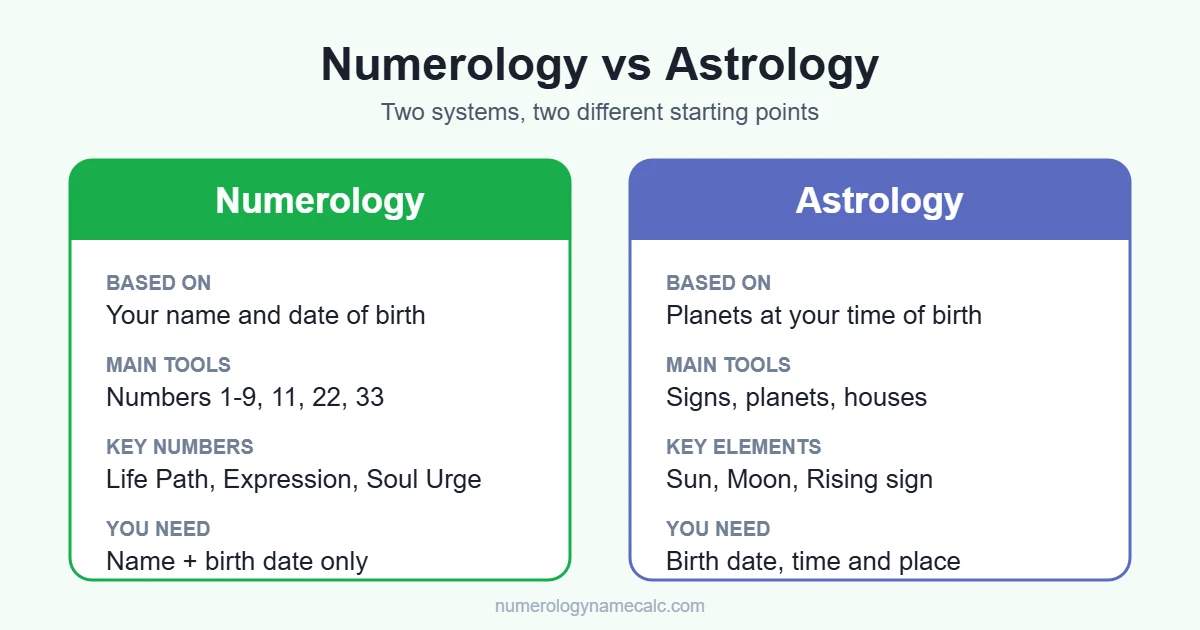
This is one of the most common follow-up questions when people ask “what is numerology,” so let’s address it directly.
| Feature | Numerology | Astrology |
|---|---|---|
| Based on | Numbers from names and dates | Positions of celestial bodies |
| Primary tool | Birth name + birthdate | Birth chart (time, date, location) |
| Core identifier | Life Path Number | Sun sign / rising sign |
| Best for | Personality analysis, yearly themes | Timing, relationship compatibility, long-term cycles |
| Complexity | Moderate (basic math) | High (requires precise birth time and ephemeris data) |
| Learning curve | Lower | Higher |
Both systems are classified as pseudosciences by the scientific community. Neither has empirical evidence supporting its claims. But they serve different purposes for the people who use them.
Choose numerology if you want something you can calculate yourself with just a name and birthdate. Choose astrology if you want more detailed timing predictions and don’t mind the steeper learning curve.
Many people use both systems together, treating them as complementary lenses rather than competing ones.
Does Numerology Have Any Scientific Basis?
No. The scientific community classifies numerology as a pseudoscience. There is no peer-reviewed research demonstrating that numbers derived from names or birthdates can predict personality traits or life events.
The main scientific objections are:
- No mechanism. There’s no known physical process by which the numerical value of a name could influence someone’s personality or future.
- Not falsifiable. Numerology descriptions are often broad enough to apply to almost anyone (similar to the Barnum effect in psychology).
- No predictive power. Controlled studies have not shown that numerology predictions perform better than random chance.
That said, many people find value in numerology as a framework for self-reflection. The same way journaling prompts or personality quizzes can spark useful thinking about your life, numerology gives people a structured way to consider their strengths, weaknesses, and goals.
The key is knowing what you’re working with. If you approach numerology as a fun self-reflection tool, it can be genuinely useful for thinking through decisions. If you treat it as a science that predicts the future, you’ll be disappointed.
Who Uses Numerology and Why?
Numerology attracts a wide range of people. Here’s who tends to use it and how:
- Entrepreneurs and business owners sometimes use numerology to choose business names, launch dates, or branding elements. Whether or not the numbers “work,” the process forces intentional thinking about naming and timing.
- Content creators and bloggers write about numerology because it generates strong search interest and audience engagement. It’s a popular topic in the wellness and spirituality niche.
- People going through transitions (career changes, breakups, moves) often turn to numerology for a sense of direction or confirmation.
- Spiritual practitioners integrate numerology into broader practices alongside tarot, astrology, and meditation.
Practical tip for business owners: Even if you’re skeptical, understanding numerology basics can help you connect with audiences who care about it. If your target market includes wellness-oriented consumers, knowing the language of numerology is a smart move.
Common Mistakes Beginners Make with Numerology
If you’re just getting started, here are the most frequent errors I see:
- Using a nickname instead of your birth name. The Pythagorean system specifically calls for the name on your birth certificate.
- Not reducing to a single digit. Remember to keep adding digits together until you reach 1–9 (or a master number).
- Confusing master numbers with regular double digits. Only 11, 22, and 33 are master numbers. The number 44, for example, would be reduced to 8.
- Over-relying on one number. Your Life Path Number is just one piece. A full profile includes Expression, Soul Urge, and other numbers.
- Treating it as absolute truth. Numerology works best as a thinking tool, not a rigid prediction system.
How to Get Started with Numerology: Actionable Steps
Here’s a simple path if you want to explore numerology for yourself:
- Calculate your Life Path Number using the step-by-step method above. Write it down.
- Read about your number’s traits. Compare them honestly against your actual personality. Note what resonates and what doesn’t.
- Calculate your Expression Number from your birth name using the Pythagorean chart.
- Figure out your 2026 Personal Year Number to see what theme numerology assigns to your current year.
- Keep a journal. Track whether the themes and patterns numerology identifies actually show up in your daily life. This gives you real-world data to evaluate the system for yourself.
Smart recommendation: Start with free online calculators to get your numbers, but learn the manual calculation method too. Understanding the math helps you spot errors in automated tools.
FAQ
What is numerology in simple terms?
Numerology is a belief system that finds meaning in numbers calculated from your name and birthdate. Each number (1–9) is associated with specific personality traits and life themes.
Is numerology a real science?
No. Numerology is classified as a pseudoscience. There is no empirical evidence that numbers derived from names or dates can predict personality or events. It’s a belief system, not a scientific discipline.
What is the most important number in numerology?
The Life Path Number, calculated from your full date of birth. It’s considered the foundation of your numerology profile and represents your core personality and life purpose.
Can numerology predict the future?
Numerology practitioners claim it can identify patterns and themes, but it cannot predict specific events. No controlled study has demonstrated predictive accuracy beyond random chance.
What is a Universal Year in numerology?
A Universal Year is the single digit sum of the current calendar year’s digits. In 2026, the Universal Year is 1 (2+0+2+6 = 10, 1+0 = 1), associated with new beginnings and leadership.
What’s the difference between Pythagorean and Chaldean numerology?
Pythagorean numerology assigns numbers 1–9 to letters in alphabetical order. Chaldean numerology assigns numbers based on sound vibrations and only uses numbers 1–8 (9 is considered sacred and not assigned). Pythagorean is more common in the West.
How do master numbers work?
Master numbers are 11, 22, and 33. When these appear during calculation, you don’t reduce them further. They’re considered to carry amplified energy and greater potential (along with greater challenges).
Can I use numerology for my business?
Some entrepreneurs use numerology to evaluate business names, launch dates, or branding choices. While there’s no scientific evidence it affects outcomes, the process encourages intentional decision-making about naming and timing.
Does my name change affect my numerology?
In traditional numerology, your birth name remains your primary identifier. However, some practitioners also analyze your current name (married name, stage name) as a secondary influence.
How often should I check my numerology?
Your Life Path and Expression numbers never change. Your Personal Year Number changes annually. Most practitioners suggest reviewing your Personal Year Number at the start of each calendar year.
Try these free numerology tools:
- Name numerology calculator: find your name number in Chaldean and Pythagorean
- Life Path Number calculator: your number from your date of birth
- Life Path Numbers guide: meaning, love and career for every number
Is your name right for your date of birth?
Get your personal Name Correction & Numerology Report: your Life Path, a name check against your birth date with lucky spelling suggestions, your Lo Shu Grid, lucky numbers and colours, and a 12-month forecast with your best days. 12-page PDF, instant download.
Get my reportConclusion
So, what is numerology? It’s a centuries-old system that assigns meaning to numbers derived from your name and birthdate. It’s not a science, and it can’t predict your future with any verified accuracy. But as a framework for self-reflection and intentional thinking, many people find it genuinely useful.
If you want to get started, here are your actionable next steps:
- Calculate your Life Path Number using your full birthdate.
- Look up the traits associated with your number and see what fits.
- Calculate your 2026 Personal Year Number to explore what themes numerology assigns to your current year.
- Stay grounded. Use numerology as one input among many when making decisions, not as the sole authority.
Whether you’re an entrepreneur looking for a business name, a content creator exploring wellness topics, or just someone curious about what your numbers say, numerology offers a structured and accessible entry point into self-analysis. Just keep your expectations realistic and your critical thinking active.