Why Name Numerology Is Booming in 2026
Name numerology is booming because it sits at the intersection of three powerful forces: the desire for meaningful baby names, the accessibility of free digital tools, and a cultural appetite for personalization. Parents in 2026 are actively consulting numerology alongside astrology when choosing names and the practice has expanded well beyond babies into business naming, personal branding, and self-improvement.
I’ve watched this trend build over the past few years, and the data backs it up. More parents are factoring numerological compatibility into baby name decisions entrepreneurs are testing business names against numerology charts, and content creators are building entire audiences around number-based name analysis. Let’s break down exactly what’s driving this growth and whether it’s something worth paying attention to.
What Is Name Numerology and How Does It Work?
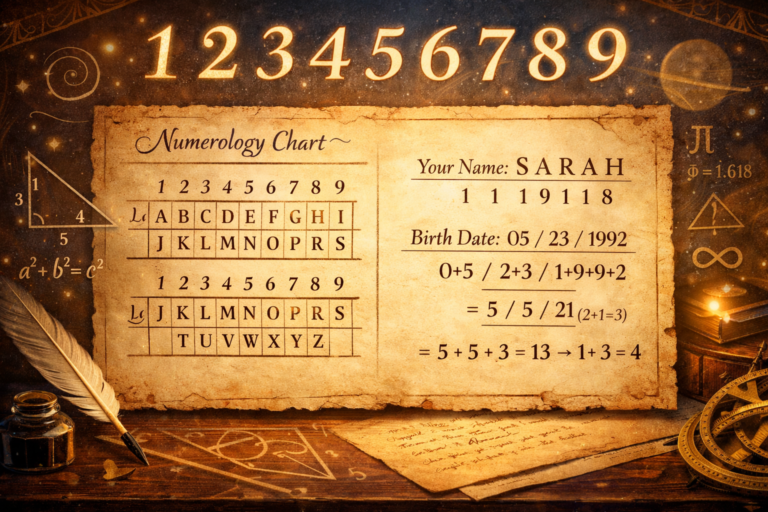
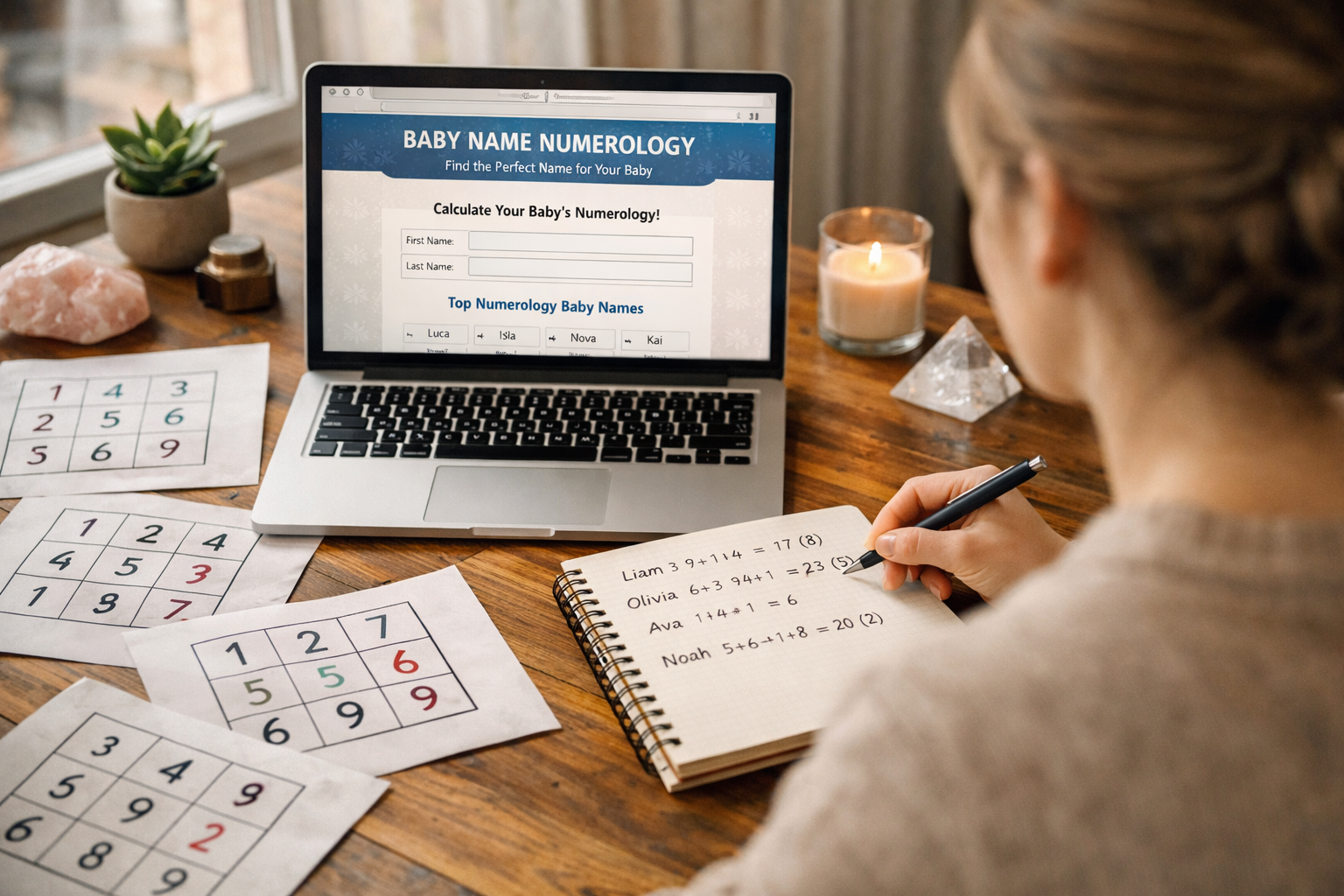
Name numerology is a system that converts each letter of a name into a number (typically 1 through 9), then reduces those numbers to a single digit or “master number” (11, 22, 33). That final number is believed to carry specific personality traits, life path tendencies, and energetic qualities.
Here’s a simplified breakdown of the most common system (Pythagorean):
| Letter | Number |
|---|---|
| A, J, S | 1 |
| B, K, T | 2 |
| C, L, U | 3 |
| D, M, V | 4 |
| E, N, W | 5 |
| F, O, X | 6 |
| G, P, Y | 7 |
| H, Q, Z | 8 |
| I, R | 9 |
Example: The name “Liam” would be calculated as L(3) + I(9) + A(1) + M(4) = 17, then 1 + 7 = 8. In numerology, 8 is associated with ambition, authority, and material success.
Common mistake: People often confuse name numerology with life path numbers. Your life path number comes from your birthdate. Name numerology specifically analyzes the letters in your given name, married name, or business name.
Why Name Numerology Is Booming 2026 Among New Parents
The biggest driver of name numerology’s growth is the baby naming market. Parents in 2026 aren’t just picking names that sound nice they’re researching meanings, cultural roots, and yes, numerical significance.
According to baby name trend reports, parents are increasingly blending traditional naming with astrological and numerological guidance. The Times of India reported that astrology and zodiac-based baby name trends are a major factor for parents in 2026, and numerology is a natural extension of that interest.
Several factors are fueling this among parents:
- The search for uniqueness with meaning. Parents want names that stand out but also carry weight. Numerology gives them a framework to evaluate whether a name “fits” their hopes for their child.
- Cultural traditions going global. In many South Asian, East Asian, and Middle Eastern cultures, consulting a numerologist before naming a child has been standard practice for generations. As these traditions gain visibility online, parents from other backgrounds are adopting them too.
- Name trend resources now include numerology. Sites like Nameberry, The Bump, and Happiest Baby have expanded their baby name coverage to include meaning-based and trend-based analysis [1][2][3], creating a pipeline where parents encounter numerology concepts during their research.
Real-world example: A parent researching the name “Aria” might learn it has a numerological value of 3 (creativity, expression, joy). If they value those traits, numerology reinforces their choice. If they were hoping for a name associated with stability (4) or leadership (1), they might keep looking.
Straightforward guidance: If you’re a parent exploring name numerology, treat it as one input among many — alongside pronunciation, family significance, and cultural meaning. It works best as a tiebreaker, not the sole decision-maker.
How Social Media and Technology Accelerated the Trend
Name numerology didn’t become mainstream through books or workshops. It exploded through TikTok, Instagram Reels, and YouTube Shorts.
Content creators figured out that numerology content is inherently shareable. A video titled “What your name’s number says about you” invites immediate engagement because everyone has a name, and everyone wants to know what their number means. This is classic user-focused content it’s personal, it’s quick, and it prompts comments and shares.
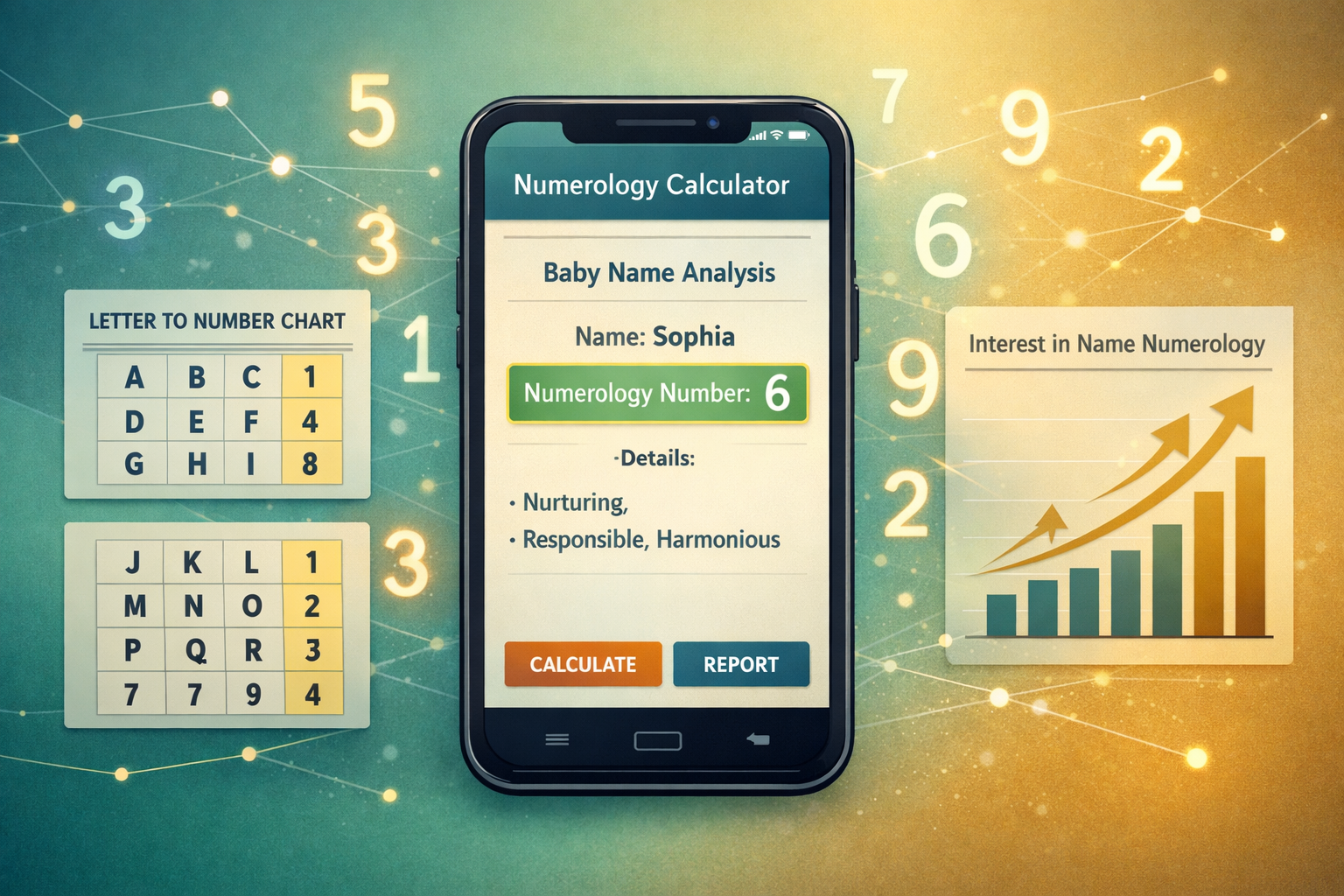
The technology side matters just as much. In 2026, there are dozens of free name numerology calculators online. You type in a name, and the tool instantly returns its numerological value with a personality profile. This removed the biggest friction point: you no longer need to understand the math or consult a practitioner.
Here’s a step-by-step look at how someone typically encounters name numerology today:
- They see a social media post – usually a short video or carousel breaking down celebrity names by number.
- They search their own name– using a free online calculator.
- They share their result– with friends, family, or followers.
- They go deeper– researching compatibility numbers, business name analysis, or baby name numerology.
- Some become paying customers– booking consultations with professional numerologists or purchasing premium reports.
This funnel is why name numerology content performs so well for creators and why the practice keeps growing. It’s built for virality.
Smart recommendation: If you’re a content creator or blogger, name numerology content has strong engagement potential. “Calculate your name number” posts generate comments, and comparison-style content (e.g., “Best numerology numbers for business names”) attracts search traffic with clear intent.
Why Name Numerology Is Booming in Business and Branding
It’s not just parents. Entrepreneurs and small business owners are increasingly running potential business names through numerology analysis before making final decisions.
The reasoning is straightforward: if you’re going to spend years building a brand, some founders want every possible edge — including energetic alignment. Whether or not you believe in the metaphysical claims, the process of evaluating a name through multiple lenses (sound, meaning, memorability, and numerology) often leads to more thoughtful naming decisions.
Who uses name numerology for business?
- Solopreneurs and coaches choosing a brand name or personal brand identity
- E-commerce store owners testing product line names
- Startups in wellness, lifestyle, and creative industries
- Affiliate marketers and bloggers selecting domain names
Professional numerologists who specialize in business naming report that demand has grown significantly, with consultations often booked weeks in advance. Some naming consultants, like those featured on platforms such as mddawood.com, now offer combined services that blend traditional naming expertise with numerological analysis [5].
Decision rule: Choose numerology-informed naming if you’re in a brand-sensitive industry (wellness, coaching, luxury goods) where perceived alignment and intentionality matter to your audience. Skip it if speed-to-market is your priority and your customers care more about function than feeling.
The Cultural Shift Behind the Boom
Why name numerology is booming goes beyond apps and algorithms. There’s a deeper cultural current at work.
People in 2026 are actively seeking frameworks for making decisions that feel meaningful. This shows up everywhere: in the popularity of personality typing systems (Enneagram, Myers-Briggs, Human Design), in the growth of astrology apps, and in the way consumers choose brands that align with their values.
Name numerology fits neatly into this pattern. It offers:
- A sense of agency. You’re not just picking a name you’re choosing an energy.
- A conversation starter. Telling someone “I chose this name because it’s a 7, which represents wisdom” is more engaging than “I just liked how it sounded.”
- A bridge between logic and intuition. The numerical system feels structured enough to satisfy analytical thinkers while still connecting to something beyond pure data.
Edge case to consider: Numerology can become paralyzing if you treat every number as a hard rule. I’ve seen parents agonize over a name they love because its numerological value doesn’t “match” their desired outcome. The most balanced approach is to use numerology as a lens, not a law.
Pros and Cons of Using Name Numerology
| Pros | Cons |
|---|---|
| Adds a layer of intentionality to naming decisions | No scientific evidence supports numerological claims |
| Easy to access through free tools and apps | Can create decision paralysis if taken too literally |
| Works as a tiebreaker between similar name options | Different numerology systems can give different results |
| Strong engagement tool for content creators | Professional consultations can be expensive ($50–$500+) |
| Culturally meaningful in many traditions | Risk of confirmation bias — seeing what you want to see |
Common Mistakes People Make with Name Numerology
1. Treating it as science. Numerology is a belief system, not an empirical method. Use it for inspiration and reflection, not as a predictive tool with guaranteed outcomes.
2. Mixing up systems. The Pythagorean system, Chaldean system, and Kabbalah system assign different numbers to letters. If you’re comparing results across websites, make sure they’re using the same system.
3. Ignoring practical naming factors. A name with a “perfect” numerological value that’s impossible to pronounce or spell is still a bad choice. Practicality matters.
4. Spending too much money too early. Before paying for a professional consultation, use free calculators to understand the basics. Many paid services offer the same information available for free, just with nicer packaging.
5. Overlooking cultural context. A name’s numerological value in one system may conflict with its meaning in a specific cultural tradition. Always research the full picture.
How to Calculate Your Name’s Numerology Value
Here’s a quick, actionable process anyone can follow:
- Write out the full name you want to analyze (first name, middle name, or full legal name each gives a different reading).
- Assign each letter a number using the Pythagorean chart above.
- Add all the numbers together.
- Reduce to a single digit by adding the digits of the sum together. (Exception: if you get 11, 22, or 33, these are “master numbers” and are not reduced further.)
- Look up the meaning of your final number.
Quick number meanings:
- 1 — Leadership, independence
- 2 — Cooperation, sensitivity
- 3 — Creativity, expression
- 4 — Stability, discipline
- 5 — Freedom, adventure
- 6 — Nurturing, responsibility
- 7 — Wisdom, introspection
- 8 — Ambition, material success
- 9 — Compassion, humanitarianism
- 11 — Intuition, spiritual insight (master number)
- 22 — Master builder, large-scale vision (master number)
- 33 — Master teacher, compassion (master number)
What Baby Name Trends Tell Us About Numerology’s Rise
Baby name trend reports for 2026 confirm that parents are moving toward names with built-in meaning and intention. The Bump’s analysis of trending baby names highlights a growing preference for names rooted in nature, heritage, and personal significance [1]. Happiest Baby’s 2026 trend report notes similar patterns, with parents gravitating toward names that feel purposeful [2].
Nameberry’s 2026 forecast points to a broader shift away from purely aesthetic name choices toward names that carry cultural, spiritual, or philosophical weight. Mother Mag’s coverage echoes this, noting that parents are doing more research than ever before settling on a name.
Numerology fits perfectly into this research-heavy approach. When a parent is already spending hours on baby name websites comparing meanings, origins, and popularity rankings, adding a numerological calculation is a natural next step.
Authority-driven insight: The baby naming industry has become a content ecosystem. Parents don’t just pick names from a list anymore — they consume articles, watch videos, take quizzes, and consult multiple frameworks. Numerology has become one of those frameworks, and its presence in mainstream parenting content is both a cause and effect of its growing popularity.
FAQ
Is name numerology real or just superstition?
Name numerology is a belief system with roots in ancient traditions (Pythagorean, Chaldean, Kabbalistic). There is no peer-reviewed scientific evidence that a name’s numerical value influences personality or life outcomes. Many people find value in it as a reflective and decision-making tool.
Can I change my name’s numerology?
Yes. Changing the spelling of your name, adopting a nickname, or legally changing your name will alter its numerological value. Some people do this intentionally.
Which numerology system is most accurate?
There’s no objective answer since accuracy can’t be scientifically measured for numerology. The Pythagorean system is most widely used in Western countries. The Chaldean system is considered older and is popular in parts of Asia and the Middle East.
How much does a professional numerology consultation cost?
Prices range widely from $50 for a basic name analysis to $500+ for comprehensive readings that include life path numbers, compatibility analysis, and business naming guidance.
Should I choose my baby’s name based on numerology?
Use it as one factor among many. Consider pronunciation, family significance, cultural meaning, and how the name sounds with your last name. Numerology can help you feel more confident about a choice you already like.
Can numerology help me pick a business name?
Some entrepreneurs use it as part of their naming process. It won’t guarantee business success, but it can add intentionality to your branding decisions, especially in industries where symbolism and meaning matter to customers.
Is name numerology the same as astrology?
No. Astrology is based on celestial positions at the time of birth. Numerology is based on numerical values assigned to letters or dates. They’re separate systems, though many practitioners use both together [4].
Why is name numerology more popular now than 10 years ago?
Free online calculators, social media content, and the broader cultural interest in personalization and meaning-making have all contributed. The barrier to entry dropped to zero, and the content is inherently shareable.
Do different names for the same person give different readings?
Yes. Your full legal name, first name only, nickname, and married name will each produce different numerological values. Most numerologists recommend analyzing your birth name as the primary reading.
Are master numbers (11, 22, 33) better than single digits?
Not necessarily “better” they’re considered more intense and carry greater potential along with greater challenges. Most numerologists view them as amplified versions of their root numbers (2, 4, 6).
Conclusion
Name numerology is booming in 2026 because it meets people where they already are: searching for meaning, doing research online, and looking for frameworks to make important decisions feel more intentional. Whether you’re a parent choosing a baby name, an entrepreneur naming a business, or a content creator looking for engaging topics, numerology has carved out a real space in mainstream culture.
Actionable steps you can take right now:
- Try it yourself. Use the Pythagorean chart above to calculate the numerological value of your name or a name you’re considering.
- Cross-reference with other factors. Don’t let a single number override practical considerations like pronunciation, cultural fit, and personal connection.
- If you create content, consider adding numerology-related posts to your calendar. The engagement potential is strong, and the search volume is growing.
- Stay skeptical but open. You don’t need to believe numerology is scientifically valid to find it useful as a reflective exercise or creative constraint.
The trend shows no signs of slowing down. As long as people care about names and they always will numerology will have a seat at the table.